

Despite the fact that neurological conditions affect more than 3 billion people worldwide, making them the leading cause of illness and disability, new treatments have been slow to emerge. That’s due in part to the brain’s biological complexity — and the difficulty of generating brain cells at scale that can be manipulated and studied in a standardized and unbiased way.
Working with pharma partners, Recursion has developed a new approach. By combining Roche and Genentech's deep expertise in researching neurological disorders with Recursion’s automated labs, data generation capabilities, and machine learning expertise, the team has now delivered a second neuroscience-focused, whole genome map offering a new approach to explore novel targets and pathways, addressing a major challenge in neuroscience drug discovery.
The Microglia Map represents a completely new approach to exploring the cellular mechanisms underlying neurodegenerative diseases.
According to Najat Khan, Chief R&D Officer and Chief Commercial Officer at Recursion, this approach of fundamentally mapping biology is what the industry needs most to advance better medicines to patients.
"Despite decades of relentless dedication from the scientific community and significant industry investments in neuroscience R&D, we have yet to see efforts translate into meaningful outcomes for patients,” she says. “This is primarily because our industry is often chasing the same, well-studied set of biological targets — we still don’t fully understand the complex, interconnected biology that drives these diseases.”
Najat points out that building a map of this scale — especially in a cell type as challenging as microglia, the brain’s resident immune cells — is no small feat. It requires innovation at each step, and deep collaboration across scientific and technical experts.
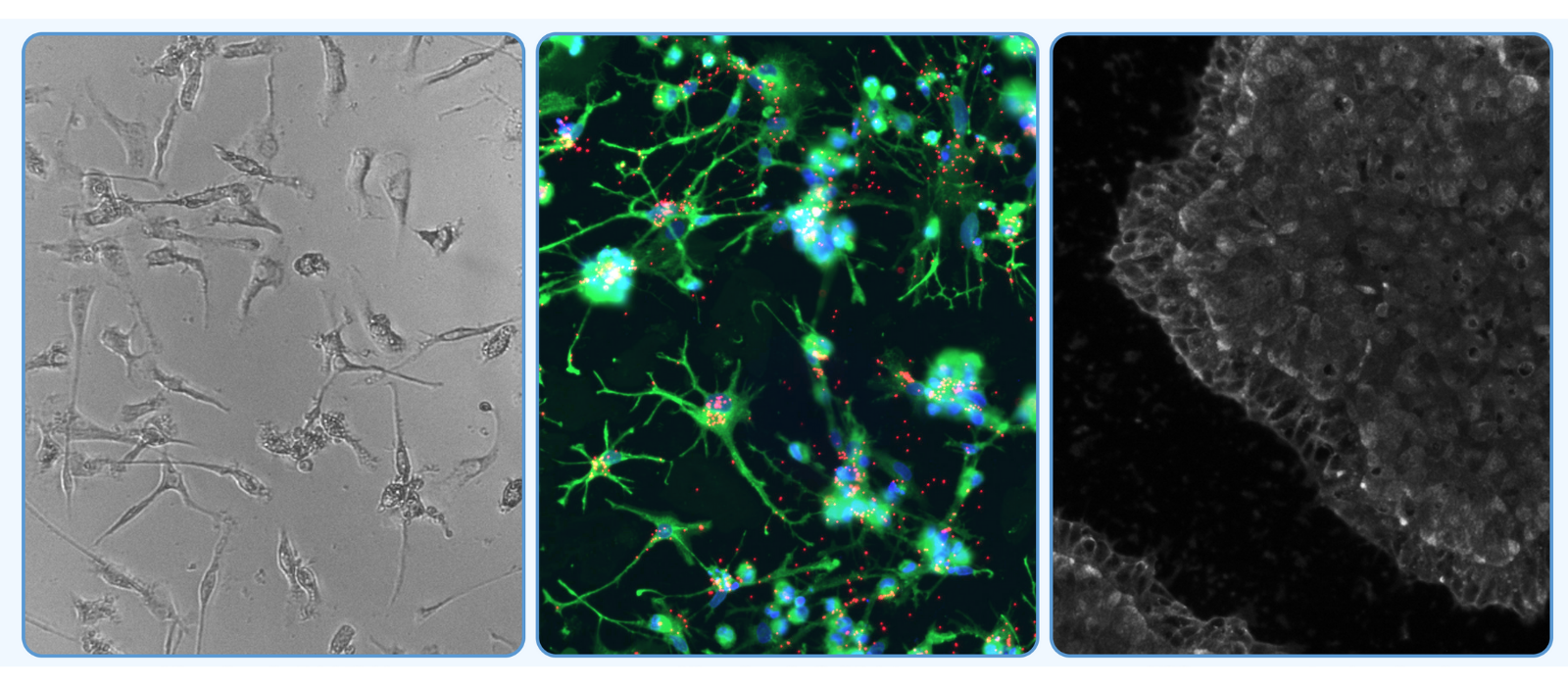
“The teams had to develop and scale new cell manufacturing techniques to produce enough microglia for our map — over 100 billion, derived from human-induced pluripotent stem cells (hiPSC)," she said. "The resulting whole-genome map contains 46 million microglial cell images spanning 17,000 genes and thousands of chemical compounds. That’s the scale and quality of data generation needed to truly leverage the power of AI to explore novel targets and pathways.”
When it comes to diseases of the brain, there’s a major need for new targets and new therapies, not just slightly better drugs, says Christopher Winrow, VP of Neuroscience at Recursion. Winrow has over 20 years of neuroscience drug discovery and development experience, including 14 years in large pharma, and says that in both pharma and biotech, he’s found it “really difficult to break the mold” of going after best-in-class therapeutics when it comes to neuroscience.
FDA approval rates for neuroscience drugs are less than half those for other therapeutic areas — and drugs targeting diseases of the central nervous system have some of the highest failure rates in medicine, both preclinically and clinically.
This is why he’s excited about the Microglia Map. “It’s an unbiased approach,” Winrow says. “We have all of this biological data in a map and we can choose where we want to explore. Some areas are going to be precedented biology — where the majority of traditional drug discovery has been focused. But what's around that is completely novel. And that enables a phenomenal opportunity to explore new therapeutic approaches.”

Celia Fernandez, Associate Principal Scientist leading the Recursion team in the evaluation of the Microglia Map, has always been interested in the brain and exploring cell biology to find new entry points for treating brain-related diseases. Along the way, she realized she also wanted to find ways to make the drug discovery process more efficient. “There’s a lot of attrition in the field” when it comes to new drugs moving through the development pipeline for neurodegeneration, she says.
Alzheimer’s disease, for instance, has been dominated by the "Amyloid Hypothesis" — the idea that a build-up of the amyloid protein is a major contributor to the disease. While this hypothesis has historically guided research and led to deep insights into the condition, the underlying biology is both extremely complex and still poorly understood.
“Rather than only focusing on these well-studied targets, we are using the power of our Recursion OS and collaborating with our colleagues at Roche and Genentech to take a holistic and unbiased approach, mapping the entire network of biology that we believe will reveal new therapeutic opportunities,” says Winrow.
.png)
It was a multi-year effort for the Recursion and Roche microglia team to develop the protocols required to manufacture the cells for the Microglia Map. They began with human-induced pluripotent stem cells (hiPSC), which can be induced to become any type of human cell. But when it comes to making microglia, says Fernandez, “They can be difficult to keep alive in dish. And they are notorious for being highly variable from batch to batch.” Recursion developed new techniques for growing these critical brain cells at massive scale, producing over 100 billion microglia in a standardized way.
As Kendra Prum, Director of Alliance Management, says, the microglial cells were “the most phenotypically active cell that we've ever tried to put into a map.”
Because microglia are the resident immune cells of the brain, they can be highly sensitive to their environment, changing states from relatively stable to becoming more reactive and inflammatory. It was critical to ensure that the microglia produced for the map started in a similar state so they could be reliably compared. “The team did an amazing job confirming that the microglia we were starting with were as stable as possible,” Fernandez says. “And that was really important because it allowed us to reliably compare all the map perturbations against one another, maximizing the biological signal and decreasing any noise from technical execution.”
The partners also worked together to determine the cell mutations that would be most interesting from a neuroscience perspective, says Prum. “In this map, we had the opportunity to do a lot of different combinations of perturbations — not only the gene knockdowns but some over-expressions that were really creative and hadn't been done before.” The end result, she says, was “a very rich data set.”
That rich data is going to serve as a critical starting point for the potential discovery of many first-in-class targets and new therapeutic programs, the researchers say.
Recursion has already shown that this mapping approach can produce results. The first map, or “Neuromap,” released in October 2024, also relied on a new technique for cell manufacturing – requiring over 1 trillion hiPSC-derived neuronal cells. That Neuromap has already led Roche and Genentech to identify a number of biological insights that could become novel targets of interest.
Growing microglia — the brain’s resident immune cells — for this latest map was an even more challenging task, but the team anticipates multiple novel targets of interest will emerge to help drive potential new treatments to patients in areas of high unmet need.
“So many companies have been focused on looking under the lamppost where there has been the most scientific attention,” says Winrow. “Now, we’re not only looking at some of those bright spots, but around them, and then looking beyond into unexplored areas where there's really exciting biology to be discovered. These may be completely new areas of neuroscience, and we are in the position, together with our partners, Roche and Genentech, to make connections across diseases and apply the power of the Recursion OS to deliver new therapeutic approaches. That really excites me about the next steps for this map.”
—
1. What is the "Microglia Map"?
The Microglia Map is a massive, searchable database created by Recursion in partnership with Roche and Genentech. It's a whole-genome phenotypic map that links the function of over 17,000 genes to their observable effects on microglia—the primary immune cells in the brain. Built from approximately 46 million images, it allows scientists to use AI to systematically explore how different genes and compounds may be implicated in a wide range of neurological diseases.
2. Why is this map important for developing new drugs for neurodegenerative diseases?
Drug discovery for neurodegenerative diseases has been incredibly slow, with very few new therapeutic targets discovered in the past 25 years. The Microglia Map provides a holistic, unbiased approach to this problem. Instead of relying on existing hypotheses, scientists can now search this comprehensive map to find completely new genes and pathways to target for first-in-class therapies.
3. What was the major technical challenge in creating this map?
The biggest challenge was manufacturing brain cells at a massive scale. Microglia are notoriously difficult to grow and keep alive and stable outside of the body. The research team had to develop new protocols to produce over 100 billion of these sensitive cells—a multi-year, first-of-its-kind effort. Ensuring the cells were in a consistent state was also critical to generating the reliable, high-quality data needed for the AI models.
4. How is this approach different from traditional drug discovery methods?
Traditional methods are often slow, manual, and biased by existing scientific literature. As described in the article, a conventional approach might involve a team of scientists manually reviewing literature to propose a few dozen potential targets, which is an inefficient process. In contrast, the Microglia Map offers a systematic, unbiased approach for evaluating thousands of gene targets at once, allowing AI to uncover novel biological connections that humans might miss.
5. Has this map-based approach shown results?
Yes. While the Microglia Map is new, a related map produced previously by the team, called the "Neuromap," has already led partners Roche and Genentech to identify a number of biological insights that could become novel targets of interest.


