
On August 5, 2026, Recursion reported business updates and financial results for its second quarter. In a related Earnings Call, Recursion CEO and President Najat Khan Chief Medical Officer Vicki Goodman, and Chief Financial Officer Ben Taylor shared details on the company’s latest partnership milestones, pipeline achievements, platform advancements, and financial results. Below, the full transcript from the Earnings Call.
Good morning everyone, and thank you for joining us. Before we begin, I’d like to remind everyone that today’s discussion will include forward looking statements. Please refer to today’s press release and our SEC filings for additional details.
At Recursion, our mission is to decode biology to radically improve patient lives, and we do this by building transformational medicines with an AI-native product engine.
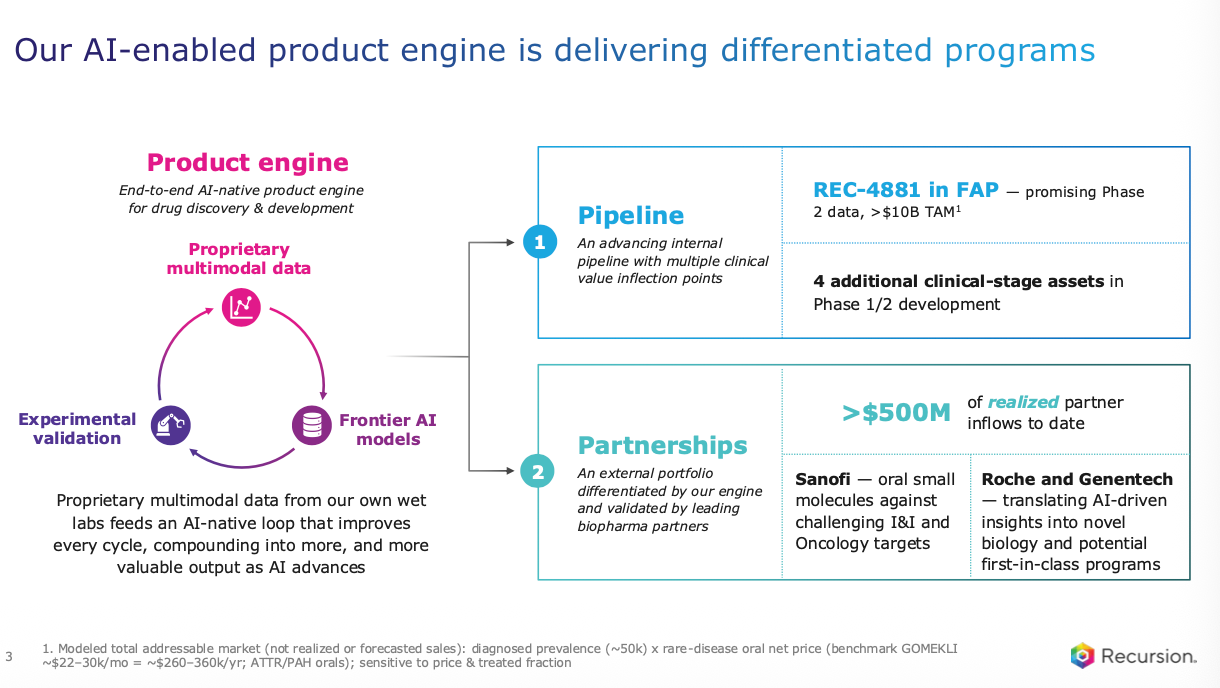
Over the past year, we have reached an important inflection point. We are no longer just discussing the potential of our platform. We are demonstrating the ability of our AI-native product engine to generate differentiated programs and medicines. Just as a reminder, the engine you see on the left hand side is built as a continuous learning system. Proprietary multimodal data created in our data factory powers Frontier AI models. And these models then generate new hypotheses where every single prediction is tested experimentally. Each cycle strengthens both the engine and the product it creates. Ultimately though, the measure of any engine is its output. So let’s talk about that.
First, our internal pipeline continues to mature. We now have five clinical stage programs including REC-4881 in FAP, where we have generated some of the most promising clinical data in the company’s history, remember, in a disease with no approved therapies, and a TAM of almost 10 billion.
Second, we continue to make significant progress in our partnerships, while learning from the best in the industry, and while validating our engine externally. Together, with leading biopharma partners, we have generated more than $500 million in realized inflows, while advancing differentiated programs with Sanofi and Roche/Genentech.
So today, I’ll share how we continue to strengthen our product engine and how we take these advances and translate it into differentiated medicines, differentiated partnerships, and ultimately better outcomes for patients.
So the question that naturally comes up, what makes our product engine different?
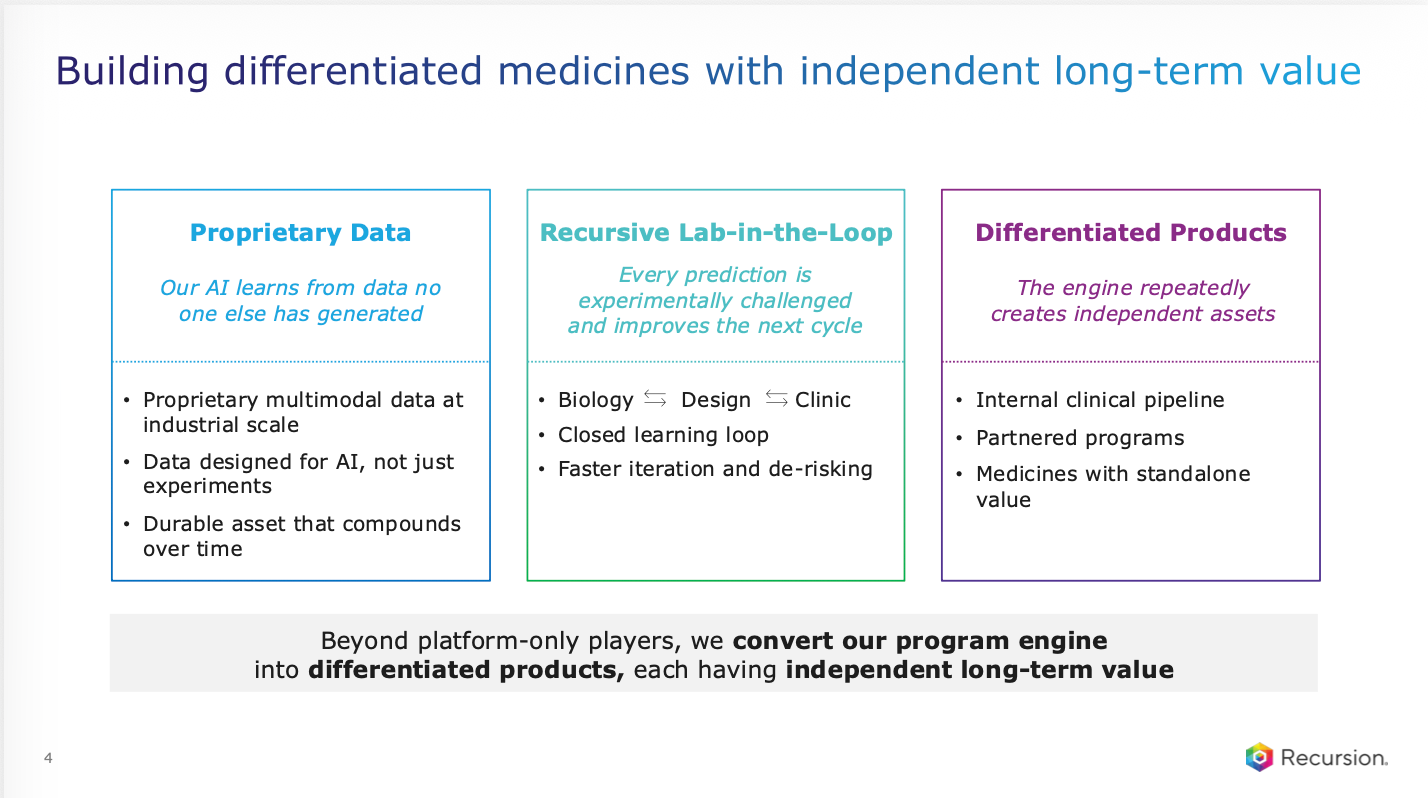
There are many companies applying AI to drug discovery. We believe our advantage isn’t AI alone. It’s the combination of three capabilities that reinforce one another.
First, we generate our own proprietary multimodal, biological, and molecular data at scale. This matters because AI can only learn well from high quality data, and much of the most valuable biology has never been measured systematically. Our 50 petabytes of data is designed specifically to train models, discover new biological relationships, and improve over time as new algorithms emerge.
Second, we connect these models directly to experimentation through a lab-in-the-loop system spanning biology, design, and increasingly, the clinic. Every predication, as I mentioned before, is validated experimentally. Every result feeds back into those models. It is that recursive loop that helps us to move faster, improve our decision quality, and systematically build confidence in our programs.
And third, and most importantly, we convert these capabilities into differentiated assets. That includes both our internal clinical programs such as REC-4881 in FAP, REC-1245/RBM-39 in solid tumors, as well as our partnered programs with Sanofi and Roche/Genentech.
2026 Milestones Delivered, Catalysts Ahead
So how are we doing?
Let’s look at the progress we’ve made over the year to date.
As we look back, over the first half or so of the year, I’m very pleased with the progress we’re making across all three dimensions of our business, our internal pipeline, our partnerships, and the continued advancement of our AI-native product engine.
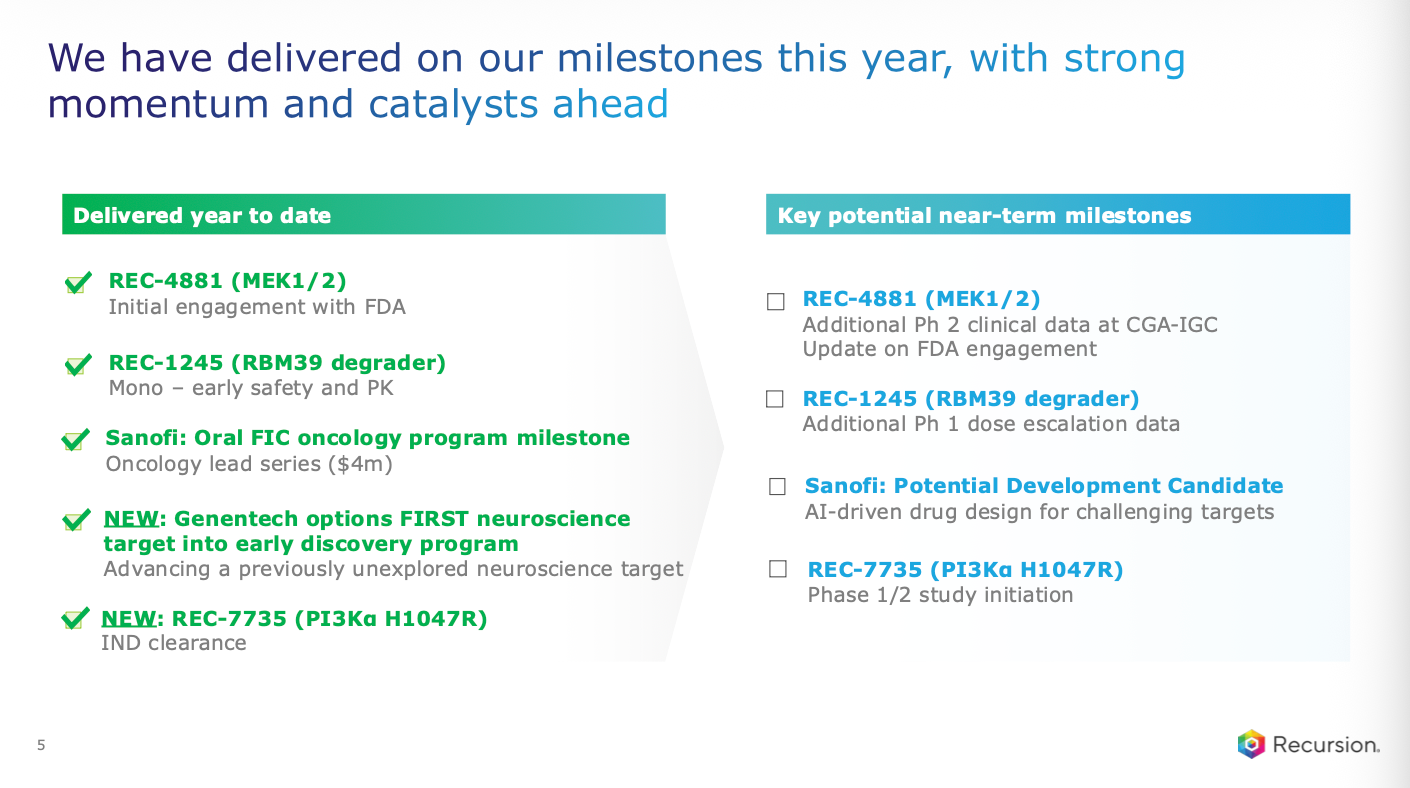
In the internal pipeline, we advanced REC-4881 with our initial FDA engagement, following encouraging phase 2 data, and additional phase 2 data coming later this year, which we will talk about shortly.
We have continued to build confidence in REC-1245 with early clinical safety and pharmacokinetic data. And, we just received IND clearance for REC-7735, positioning it to enter the clinic later this year.
At the same time, our partnerships are also making progress. As you’ll remember from earlier this year, we achieved another milestone with Sanofi, our fifth to date, on developing a novel lead series for a very challenging first-in-class oncology target.
But I’d like to pause on a new milestone in particular, that we’re announcing today. Together, with Roche and Genentech, we are thrilled to announce that Genentech advanced the collaboration’s first neuroscience target, a new unexplored target in neuroscience, into a joint early discovery program, providing early evidence that Recursion’s platform can generate novel, biologically validated targets for drug discovery. To me, this represents much more than another partnership milestone. In an area where progress has been slow for decades, it provides early evidence that a fundamentally different approach, combining proprietary disease-relevant atlases, purpose built foundation models, and rigorous computational and experimental assays that we use to build confidence, that these targets are actually causal. And, of course, last but definitely not the least, the deep collaboration, scientific and technical, with a partner can uncover previously unexplored therapeutic targets.
While it’s still early, I believe this is an important proof point for both Recursion and the broader field. It suggests that an AI-native engine can move beyond optimizing known biology to discovering new biology, compelling enough to advance into drug discovery with one of the world’s leading neuroscience organizations.
So that’s just the left hand side, but we have a lot more coming, ahead. For REC-4881, we will present additional phase 2 data at the CGA-IGC conference, a premier medical congress for inherited GI disorders, our specific target audience for FAP. We will also provide an update on our FDA interactions, as well as, continue advancing what we believe could become a transformational therapy for patients with FAP, remember, with nothing approved to date. No approved therapies.
For REC-1245, we are continuing our dose escalation and generating additional phase 1 data, and we’ll have a more wholesome update, later this year. With Sanofi, we expect the potential nomination of an oral I&I development candidate, a very important milestone that would further validate our ability to design differentiated small molecules against challenging targets, with the potential to impact multiple immune-mediated diseases.
And finally, we expect to initiate the phase 1 study for REC-7735, further expanding our clinical oncology pipeline with another precision design program from our engine.
Taken together, these milestones reflect a company that is delivering ambitious proof points that matter while executing with focus and discipline.
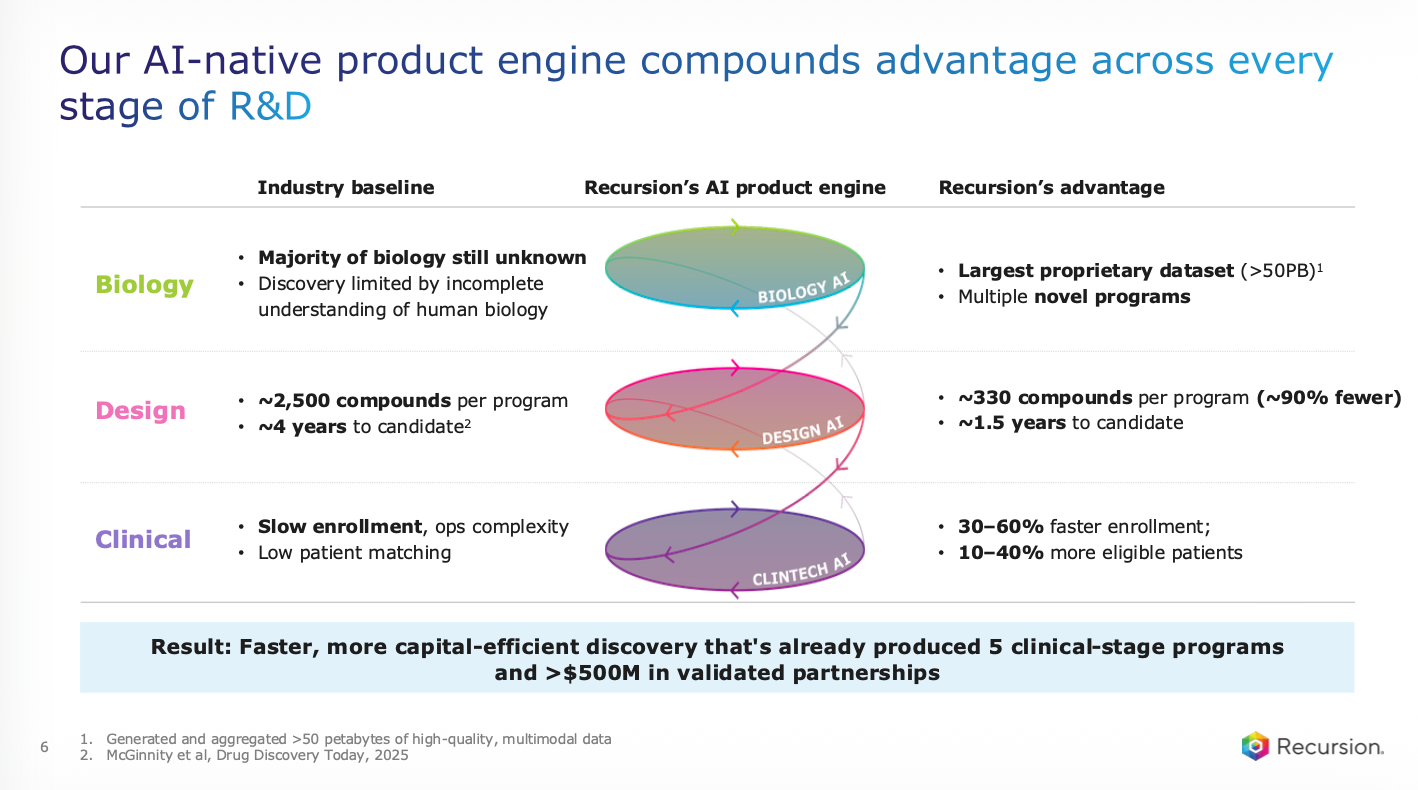
Equally important, we continue to strengthen the engine itself.
Let me show you a few examples of how that innovation applied across biology, chemistry, and clinical development, is making our engine faster and smarter.
Let’s start with biology. One of the biggest challenges in the industry is that much of human biology remains unexplored. We believe the answer isn’t simply building larger AI models. It’s generating proprietary disease-relevant data that these models can actually learn from. To do that, we have generated and aggregated more than 50 petabytes of multimodal biological data, creating what we believe is one of the largest proprietary datasets in the industry. And as that dataset grows, our models become better at discovering novel biology, and every new discovery further strengthens the engine.
That learning then carries into design. Because our biology models generate higher confidence hypotheses, our chemistry platform focuses on designing better molecules more efficiently. There’s much to share here, but one thing I’ll mention is we are advancing candidates using roughly 330 compounds over approximately a year and a half, so going from target to candidate in a year and a half. Compared with industry benchmarks for small molecules of roughly 2,500 compounds over four years. That’s a meaningful improvement in both speed and capital efficiency.
And finally, we extend that same philosophy into the clinic. Clinical development is where a lot of value is ultimately created and where also a lot of programs fail. By bringing AI into trial design, picking the right patients, I can’t reinforce that enough, and site selection, we’re already seeing improvements in enrollment, speed, and patient matching, helping us to run smarter and more efficient studies.
But one more important point. This isn’t three different capabilities, it’s one continuous learning system. Every experiment improves our data. Better data improves our models. Better models make better molecules, and then clinical data is fed back into the system to make the next generation of products even stronger.
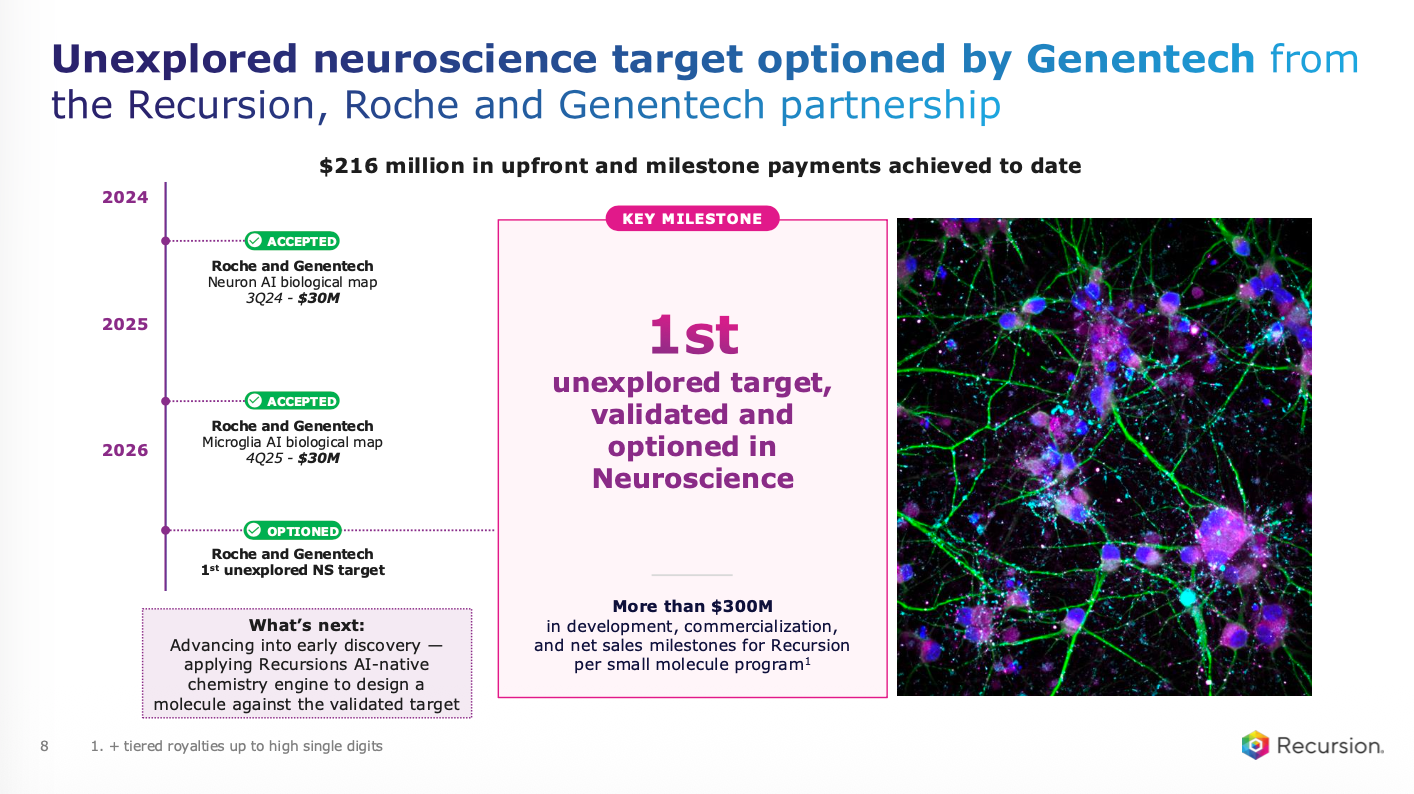
Perhaps, the best example of the flywheel in action is what we have demonstrated with Roche/Genentech and we’re announcing today, where our biology engine discovered a previously unexplored and new neuroscience target. I’d like to spend a few minutes, just to take you behind the sciences as to how we got there and why we believe this represents an important new approach to discovering medicines.
Together with Roche/Genentech, as we worked in this area to discover a new, unexplored target from our AI-driven map of biology, we focused on a few specific elements.
Why does that matter? First, this wasn’t about finding another target within well-studied biology. It was about uncovering previously unexplored biology and building enough evidence experimentally to advance it into drug discovery with one of the leading neuroscience organizations in the world.
Second, we believe this validates something bigger than a single target. It provides early evidence that when you combine the right data, build the right models, do very rigorous computational and experimental validation, and pair that with the right complementary collaboration, you can actually systematically uncover novel biology. And we believe that this is just the beginning. The underlying biological maps are reusable. This is a really important point with the potential to generate many more therapeutic opportunities over time.
Finally, across our collaboration with Roche/Genentech, we’ve now achieved more than $216M in upfront and milestone payments with the opportunity for more than $300M in additional development, commercialization, and sales milestones for each future small molecule program.
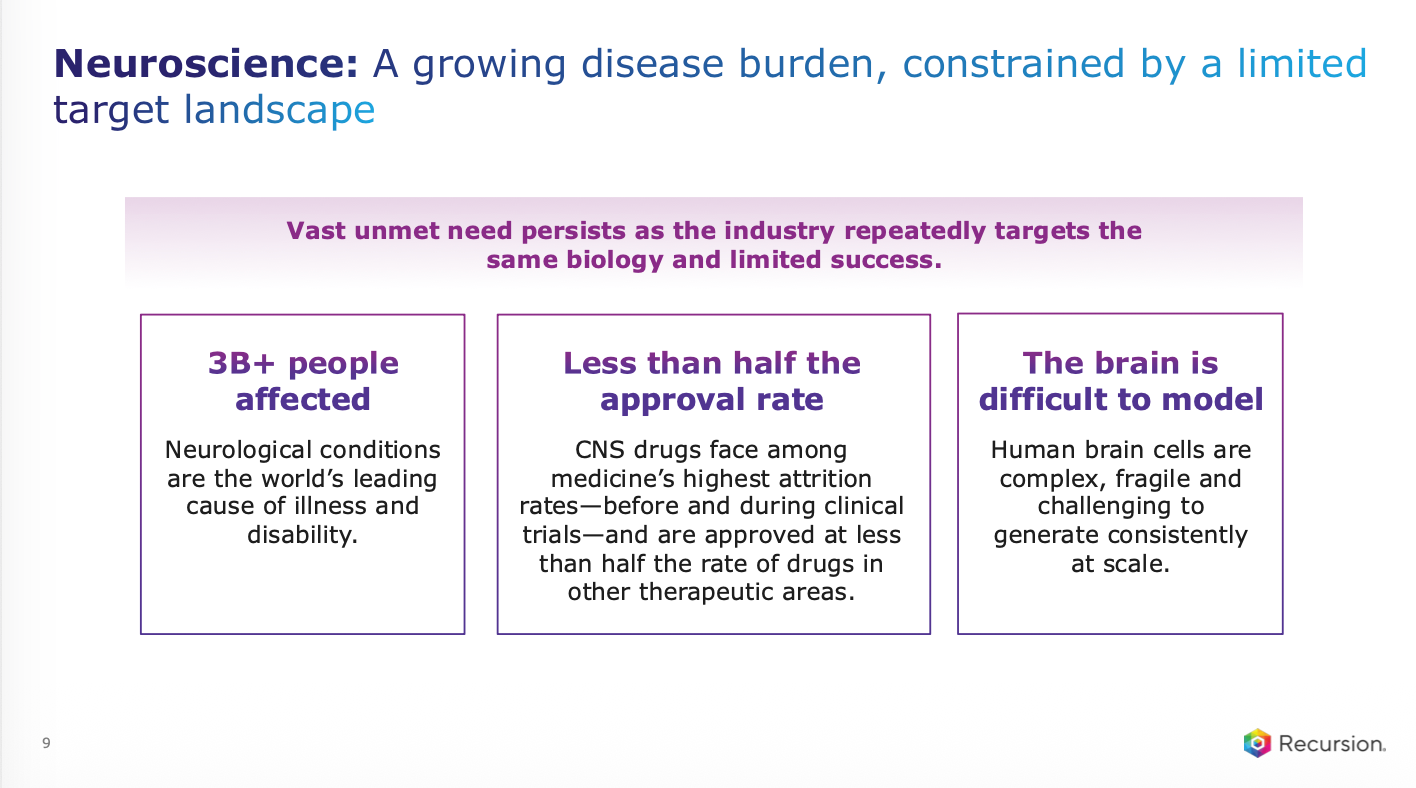
Alright, so let me show you how we built this engine. To understand why this milestone matters, the question is why neuroscience? It’s worth stepping back and asking that question. Neuroscience remains one of the greatest unmet needs in medicine.
More than 3 billion people worldwide are affected by neurological diseases. And yet, CNS drugs, as we know, continue to have amongst the lowest approval rates in industry. Neuroscience is particularly challenging because the biology is extraordinarily complex, difficult to model, and we have repeatedly returned to the same set of well-understood targets with only incremental success. We believe meaningful progress will require discovering new biology, not just simply optimizing what is already known. And that’s exactly what this collaboration was designed to do.
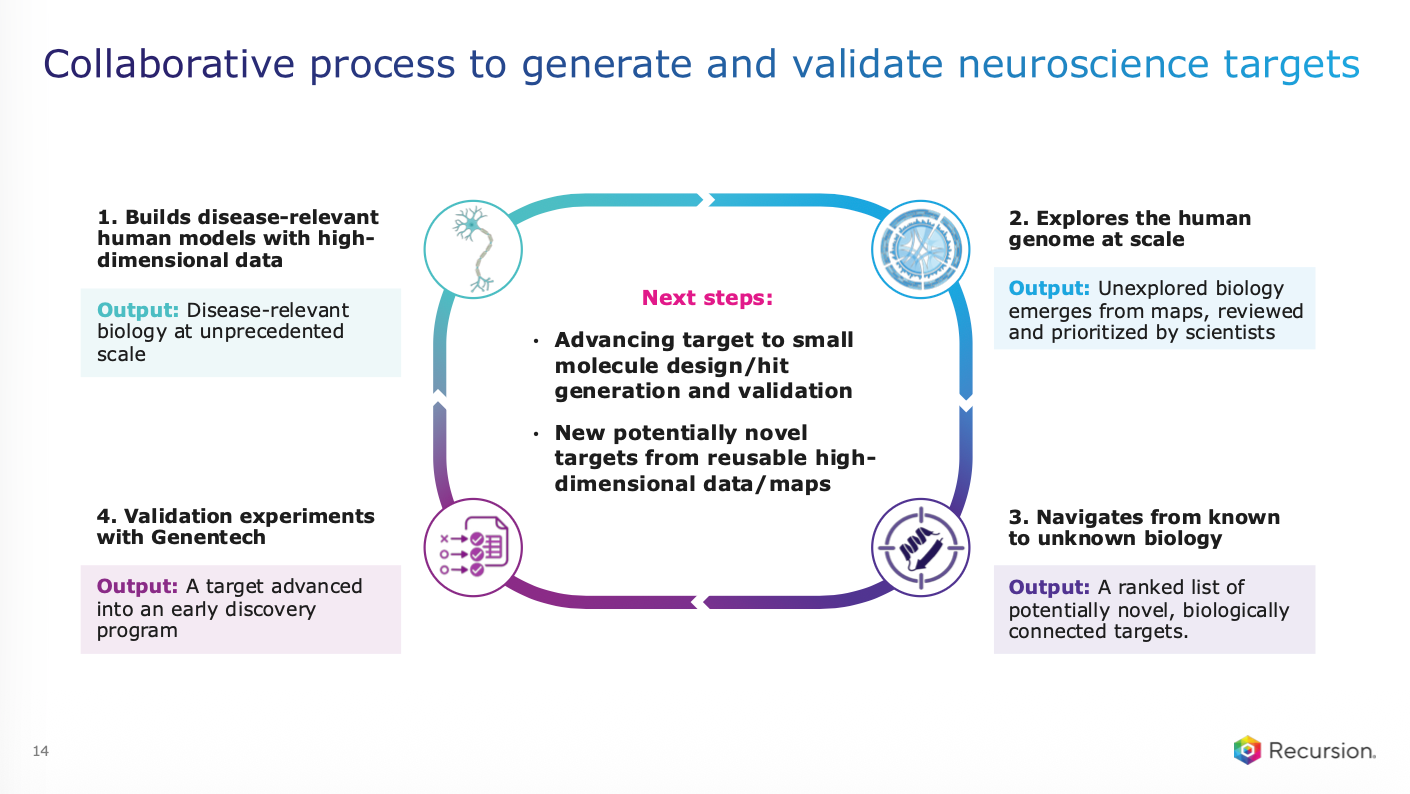
So the next question comes, what does it actually take to discover a target that people will have confidence in? And before I go into the details, just a huge, huge thank you to Roche/Genentech for this deep, shoulder-to-shoulder collaboration. It’s one of the few rare ones I've seen where the teams are looking at the same data, talking about the same models, going through what validation needs to be done. So that joint collaboration was critical here.
Everything starts with disease-relevant biology. We asked ourselves a simple question. Are we studying neurons in a context that actually reflects human disease? In our case, that meant creating hiPSC-derived neuronal and microglial cells at an unprecedented scale, more than a trillion neurons, and hundreds of billions of microglia. What this does is it creates a disease-relevant atlas that can be reused again and again to discover multiple future targets. We view this atlas as one of the most important long-term competitive advantages. But generating proprietary data, while important, isn’t enough. The next challenge is making sense of it.
Before asking the models to find something new, we grounded every analysis in causal biology that we understand today, so really grounding it in genetics. We introduced hundreds of disease-causing perturbations and anchored our searches around well-established drivers of neurological disease. That matters, because it gives every subsequent prediction of biology from a causal target from the very beginning. Rather than searching blindly across the genome, we are searching from a foundation grounded in causal genetics and disease biology.
Now once that’s established, AI can help in our foundation models and ask a much more interesting question. What is not seen? What is the unexplored biology that we don’t know of today? This is where our foundation models come in. Instead of evaluating one hypothesis at a time, the models compare the biological signatures of more than 17,000 genes across tens of millions of data points. They build relationships across the entire genome and identify genes that consistently behave like known disease drivers even if they have never been implicated in that disease before. That allows data and foundation models, not preconceived hypotheses, to compile a prioritized list of new novel potential targets.
Now AI can generate hypotheses, but medicines and programs require evidence. Together with Roche and Genentech, we looked at every predicted target and then put that through a rigorous experimental validation cascade. We build confidence in layers. First, we established that the target actually sits in the right biological pathway. Second, we show that changing the target can actually improve cellular function, for instance, neurons or microglia. And finally, but very critically, we demonstrate that this target and modulating it can meaningfully affect disease-relevant biology using multiple orthogonal assays. These assays are very robust, but they also include other multi-omic data layers such as proteomics, transcriptomics, etc. While no single experiment tells the story, what we do here is build a body of causal evidence before advancing the target.
So putting it all together, our collaboration combines four capabilities, generating disease-relevant biology at an unprecedented scale, and it’s challenging to do, to actually have a trillion hiPSC derived neuronal cells that are high-quality, standardized, viable. It takes a lot of specialized protocols and know how to do that. Second, we use foundation models to systematically explore that biology. Third, we navigate from well-understood disease mechanisms towards previously unexplored new biology. And finally, a very important step is validating all of these predictions experimentally before we advance it.
So our first neuroscience target, as I mentioned before, has now advanced into a jointly developed small molecule discovery program supported by our design platform. And again what excites us most is, of course, this target, but the fact that this kind of data is highly reusable. The potential to mine it over and over again for unexplored targets, and also this wasn’t the result of one algorithm or one experiment. It’s the result of a new operating model for discovering medicines.
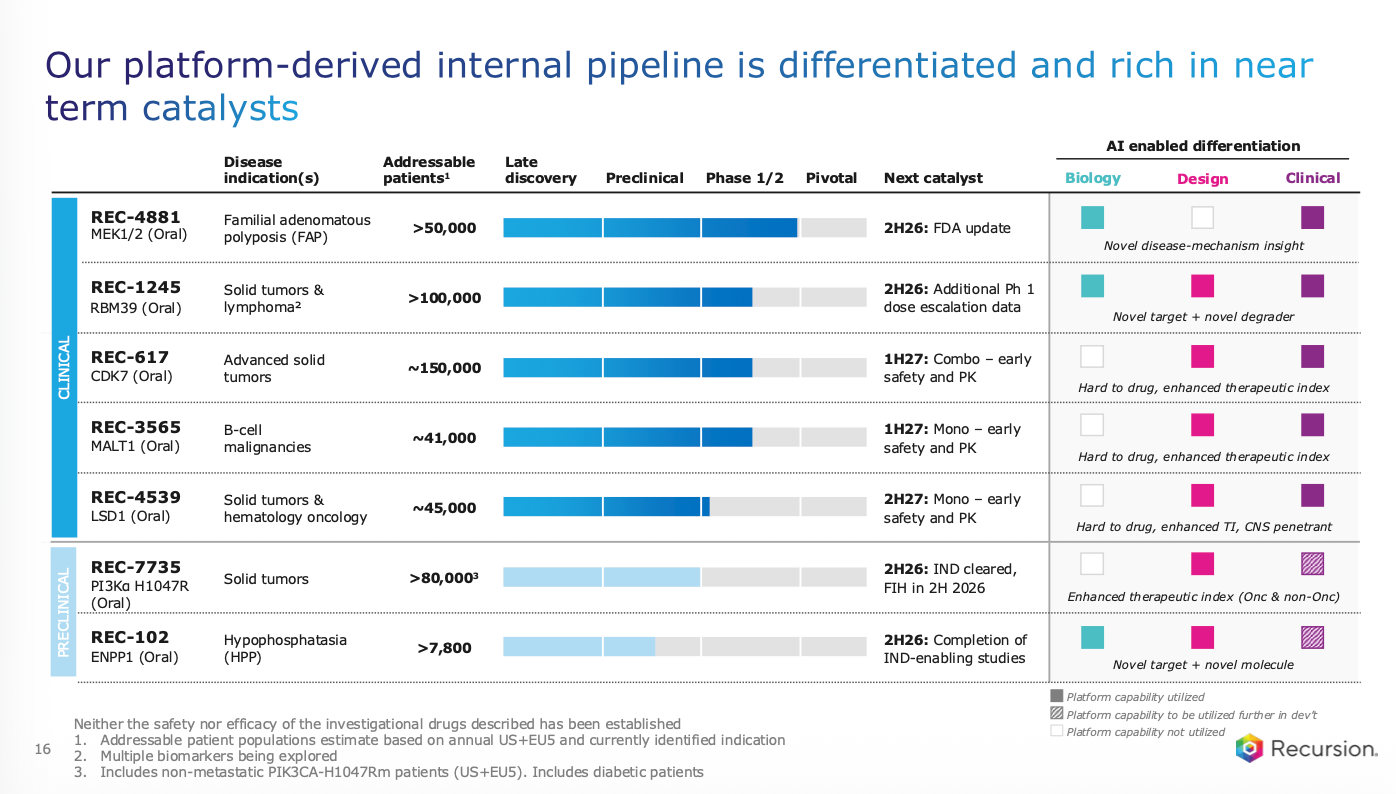
Before I hand it over to Vicky, I would like to highlight, as we move on to our internal programs, the pipeline. As you can see here, we have multiple programs in the clinic. We’re constantly looking at the data to make data-driven decisions like for REC-4881 in FAP, where there’s no approved therapies today, and REC-1245 targeting RBM-39, a novel first-in-class degrader, with limited clinical competition to date. Combined with additional internal and partner assets, we believe this creates a diversified portfolio with multiple opportunities to create value in the coming years. With that, I’m gonna turn it to Vicki to walk you through the internal pipeline in more detail.
Thank you Najat. I’ll start off this morning by talking about our REC-4881 program in FAP.
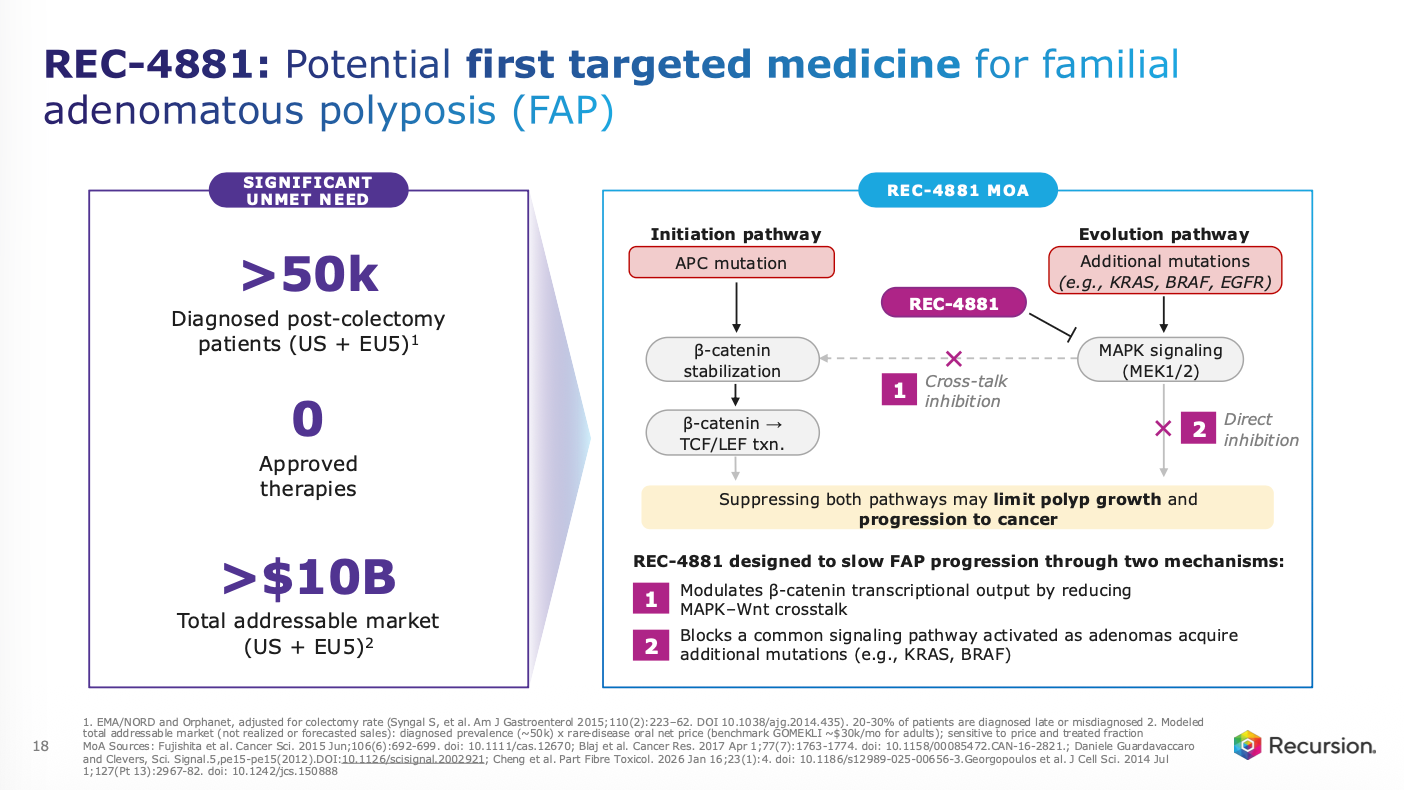
FAP is a rare disease that requires lifelong management. Patients with FAP develop hundreds to thousands of adenomatous polyps in their GI tract and require colectomy to reduce the risk of colorectal cancer. Following colectomy, polyps may continue to develop and grow, both in the residual lower GI tract, as well as in the duodenum in the upper GI tract. Patients require ongoing endoscopic surveillance, may require additional surgeries, and they continue to be at risk for GI cancers. With over 50,000 post-colectomy patients in the US and EU5, there are no approved systemic therapies to alter the course of disease. This represents an over $10 billion potential TAM. REC-4881 is an oral MEK1/2 inhibitor with a differentiated dual mechanism of action in FAP, with the potential to inhibit both new polyp formation via crosstalk inhibition of the beta-catenin pathway as well as to directly interrupt the signaling of the MAPK pathway, which is a key signaling pathway in advanced disease. So again, blocking potentially both new polyp formation as well as the existing polyps within the GI tract.
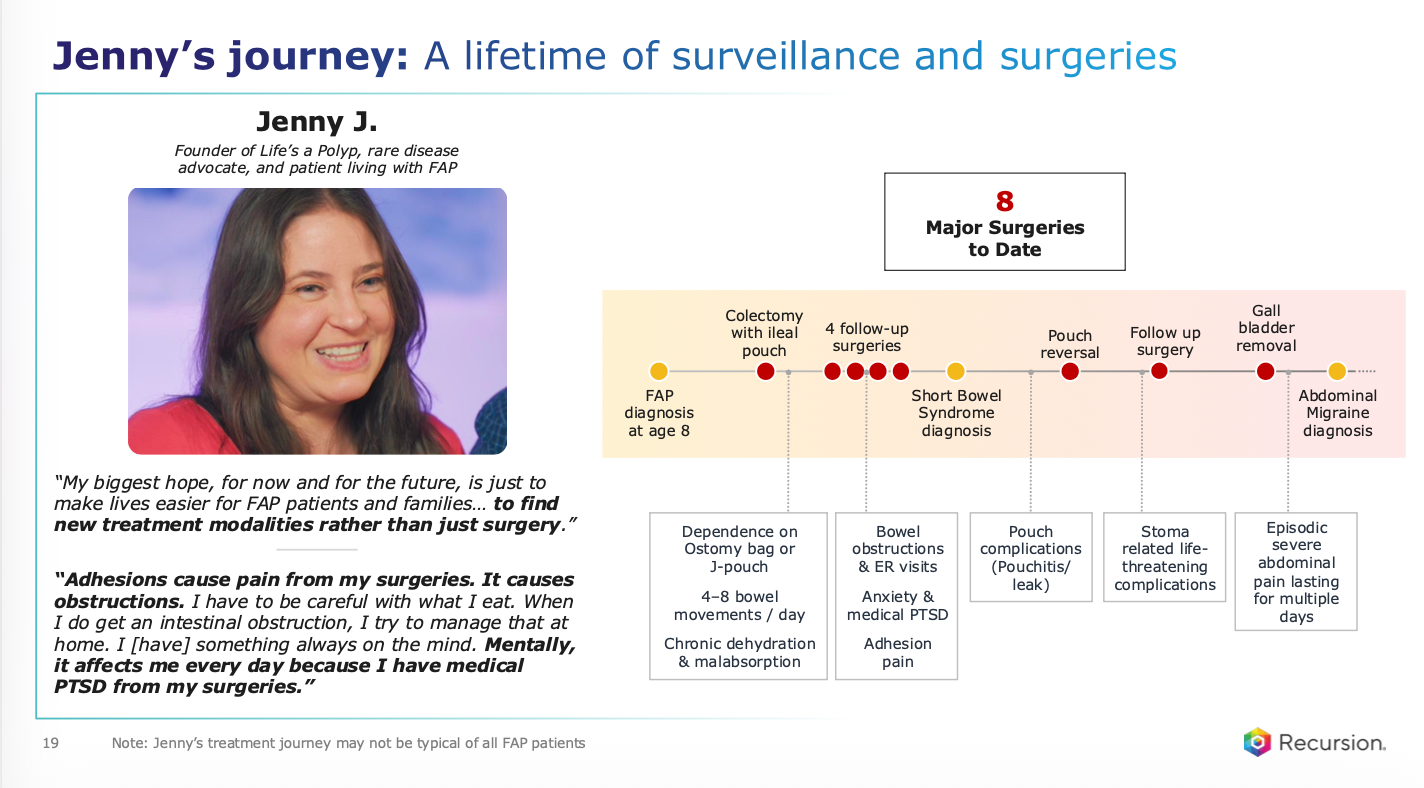
So with that, I’d like to take a minute to discuss the impact of this disease on patients through a story of a woman named Jenny who lives with FAP. Like approximately seventy percent of FAP patients, Jenny inherited the genetic mutation responsible for FAP from a parent, in her case, her mother. Seeing what her mother experienced had profound psychological impacts on Jenny, who knew from the young age of eight that she also carried this mutation. She has since had to endure multiple surgeries which have led to chronic and life altering complications, including frequent bowel movements, malabsorption and dehydration, chronic abdominal pain, and anxiety with medical PTSD from all of the surgeries and procedures. We have heard from both patients like Jenny, as well as their treating physicians, that there is an interest in a pharmaceutical intervention that can prevent polyp growth and disease progression, and ultimately lead to a reduction in the need for repeat surgical procedures.
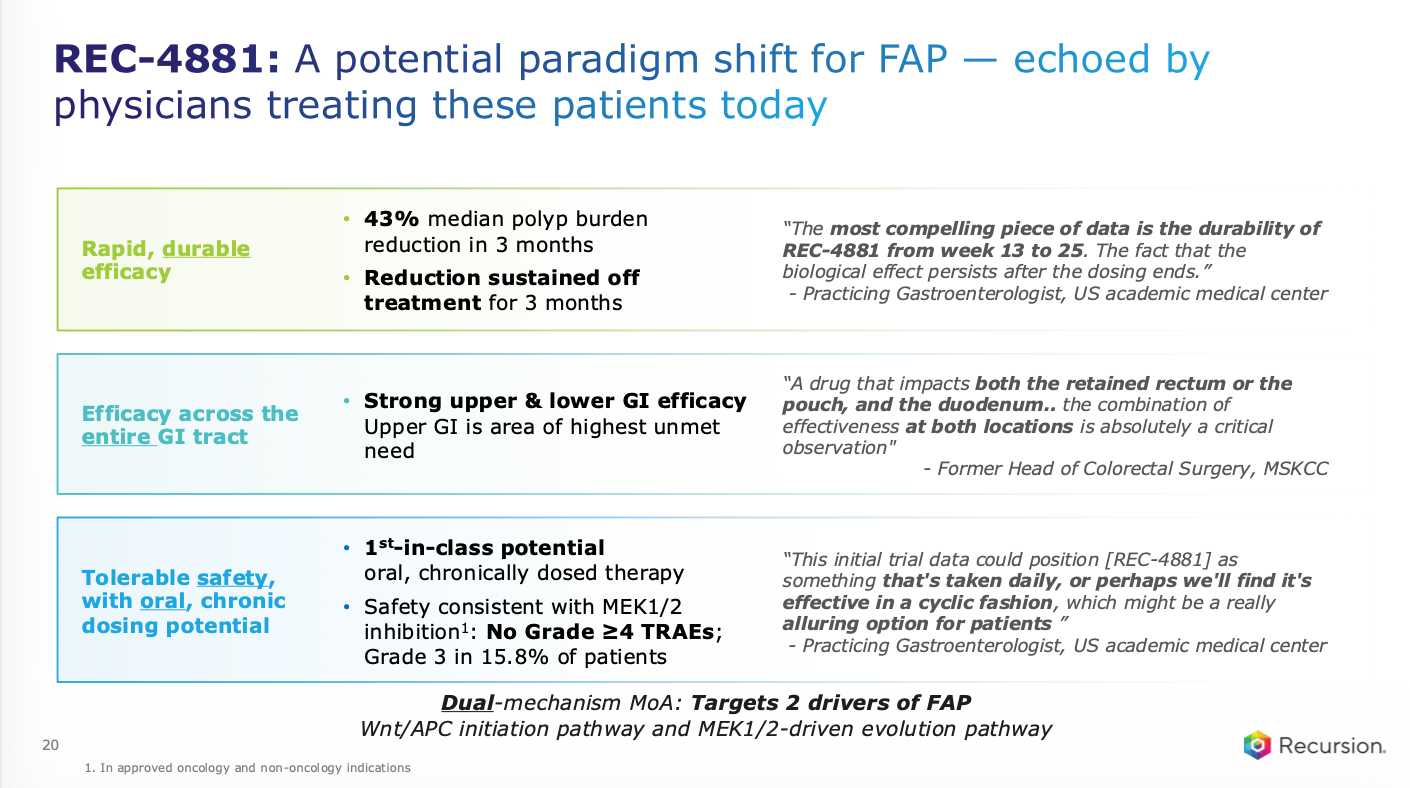
REC-4881 has shown promising clinical data in the ongoing phase 2 TUPELO study. Patients who had undergone colectomy for FPA receiving REC-4881 showed a median polyp burden reduction of 43% after 3 months of treatment. Additionally, reductions in polyp burden were seen in both duodenal disease in the upper GI tract, as well as the lower GI tract. The upper GI tract in particular is an area of high unmet need, as approximately 90% of FAP patients will develop upper GI polyps. When removal of these upper GI polyps becomes necessary, the thin mucosal wall of the upper GI tract increases the likelihood of complications including bleeding and perforation. REC-4881 has a manageable safety profile with predominantly mild to moderate adverse events consistent with the safety profile of other MEK inhibitors.
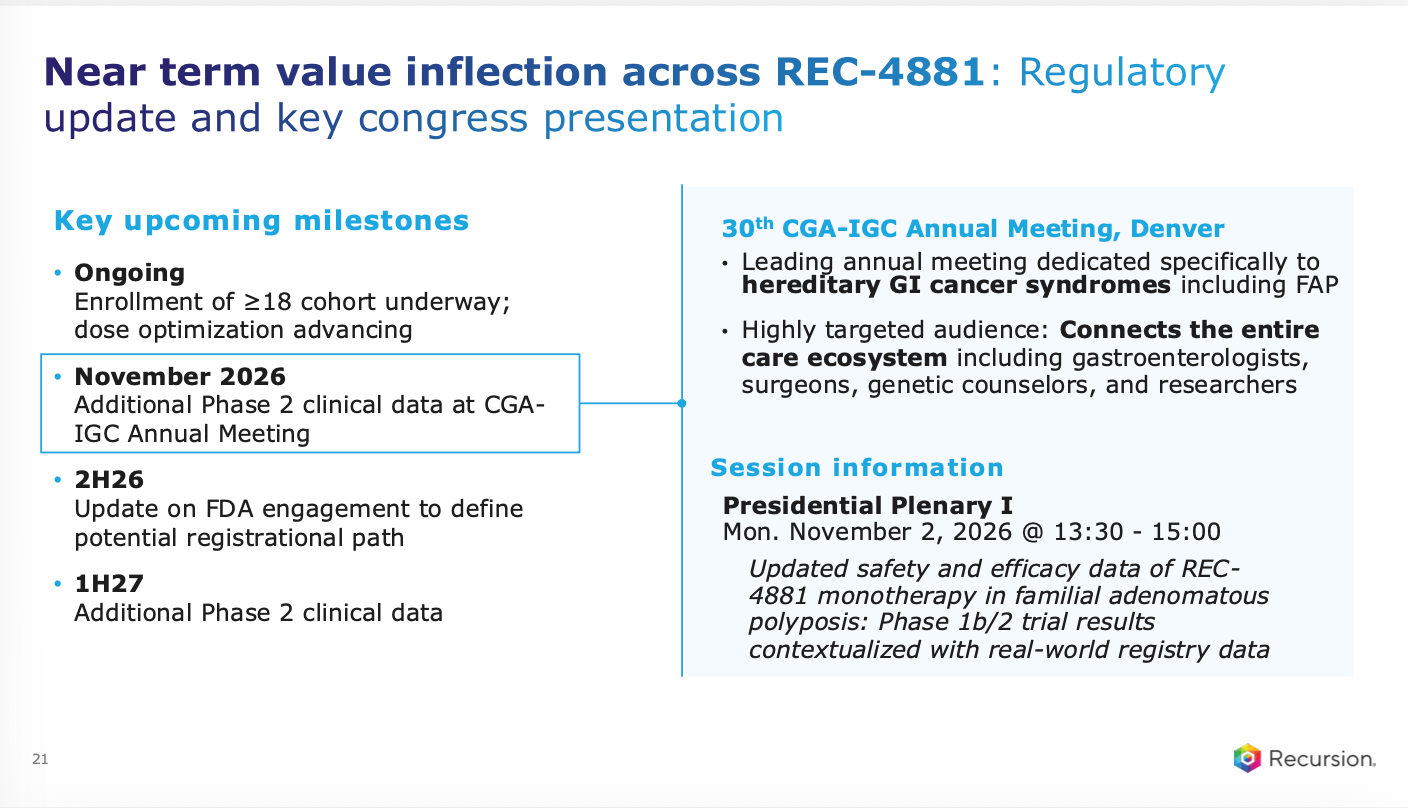
We continue to enroll patients in phase 2 of the TUPELO trial, including patients 18 years of age and older, as well as a dose optimization cohort. We are pleased to share that additional REC-4881 data will be presented during the presidential plenary session at the CGA-IGC conference in November. As Najat mentioned earlier, this conference is focused specifically on inherited GI cancer syndromes with a target audience which includes physicians who treat FAP patients. We also look forward to providing an update on FDA discussions later this year.
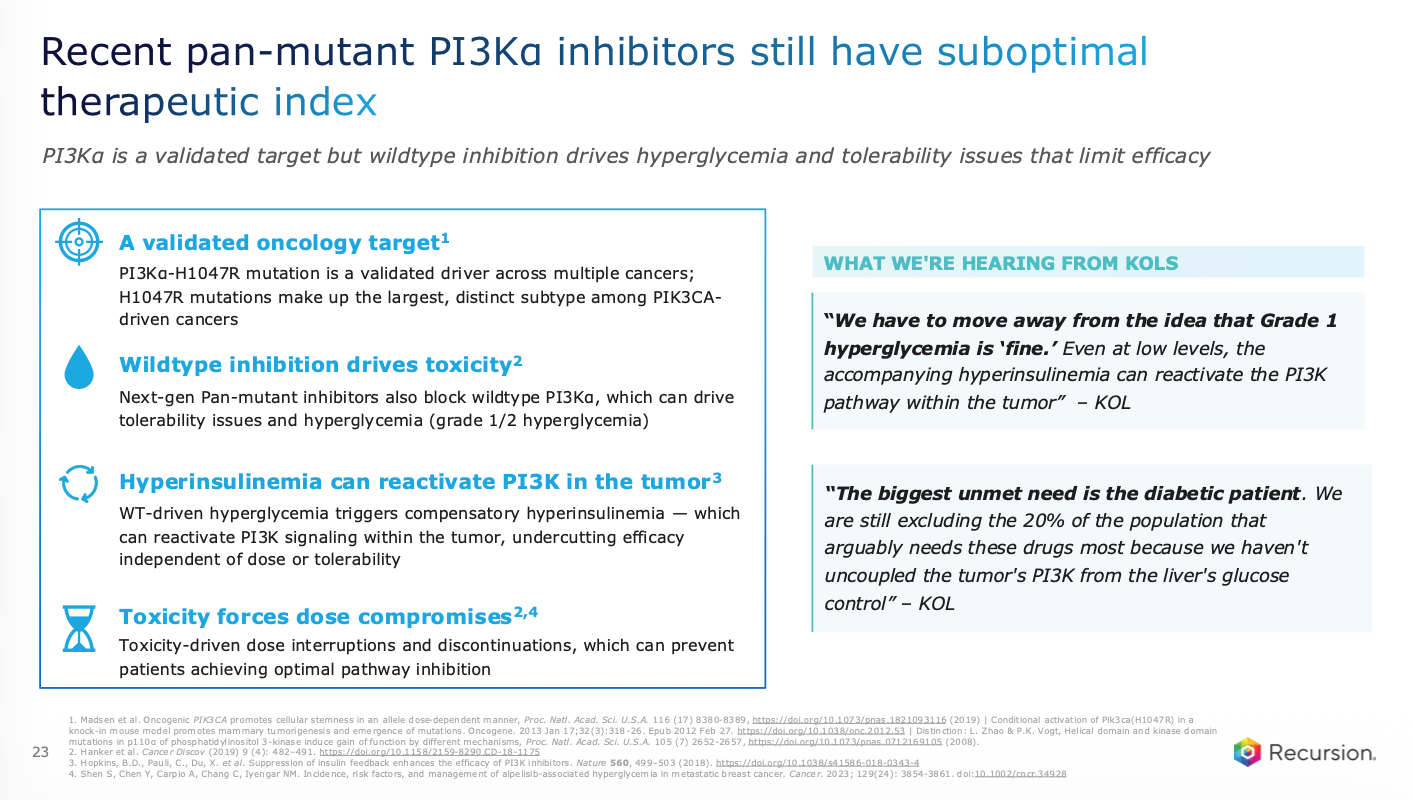
Now I’ll move on to REC-7735. PI3K is frequently mutated in several cancers and is a clinically validated therapeutic target. Lack of selectivity for the mutated form over the wild type is a key challenge for existing agents, as inhibition of wild type PI3K drives hyperglycemia. Increases in blood glucose are both a safety issue, which often limits dosing, and an efficacy issue, as the resulting hyperinsulinemia can reactivate signaling through the PI3K pathway, undercutting the efficacy of less selective drugs.
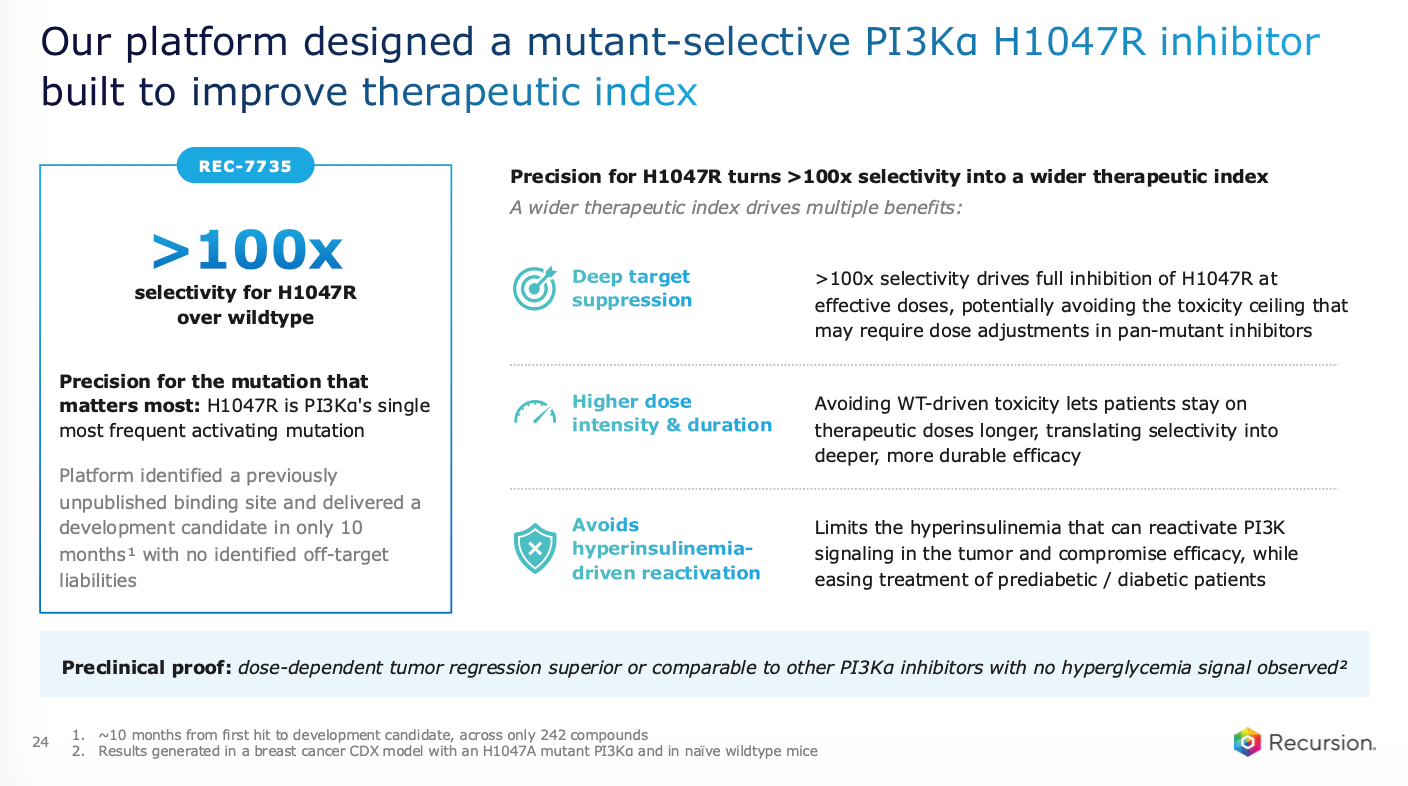
REC-7735 is precision-designed to be greater than 100x selective for the H1047R mutation, which is the most frequent activating mutation in PI3K. Recursion’s AI-native platform identified a previously unpublished binding site and delivered a development candidate in 10 months with no identified off target liabilities. As hyperglycemia and the resultant hyperinsulinemia are driven by inhibition of the wild type PI3K, the selectivity of REC-7735 is expected to result in an improved safety profile with respect to hyperglycemia and may allow expansion into patients such as diabetic and pre-diabetic patients who are unable to tolerate current PI3K targeting options.
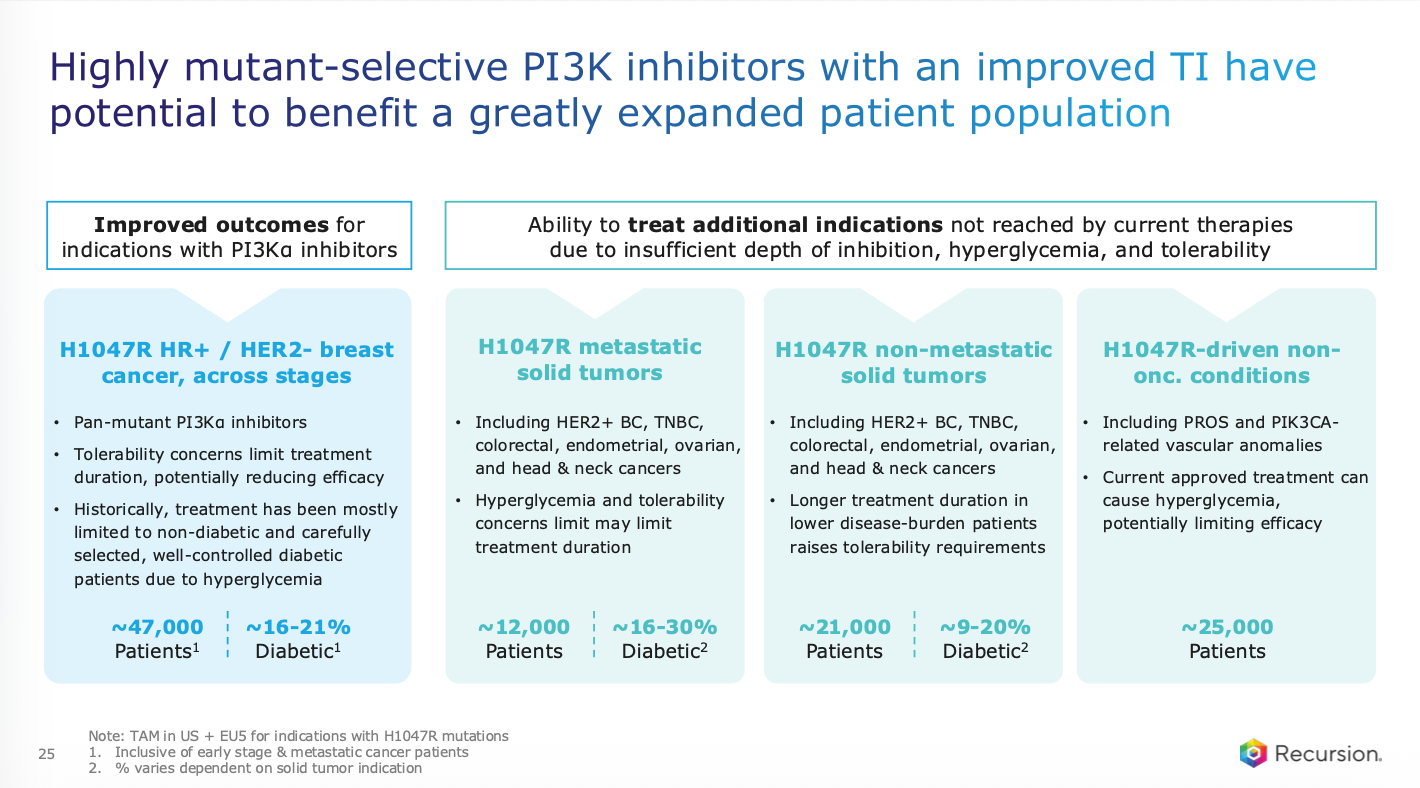
An improved therapeutic index, as I have described, may allow us to expand treatable patient populations, both within existing PI3Ka inhibitor indications, as well as, in additional solid tumors in which PIK3CA mutations are prevalent, including potentially triple negative breast cancer, ovarian cancer, and endometrial cancer, just to name a few. Additionally, the improved therapeutic index may allow expansions into earlier stages of disease within oncology as well as non-oncology populations such as PI3K driven vascular anomalies.
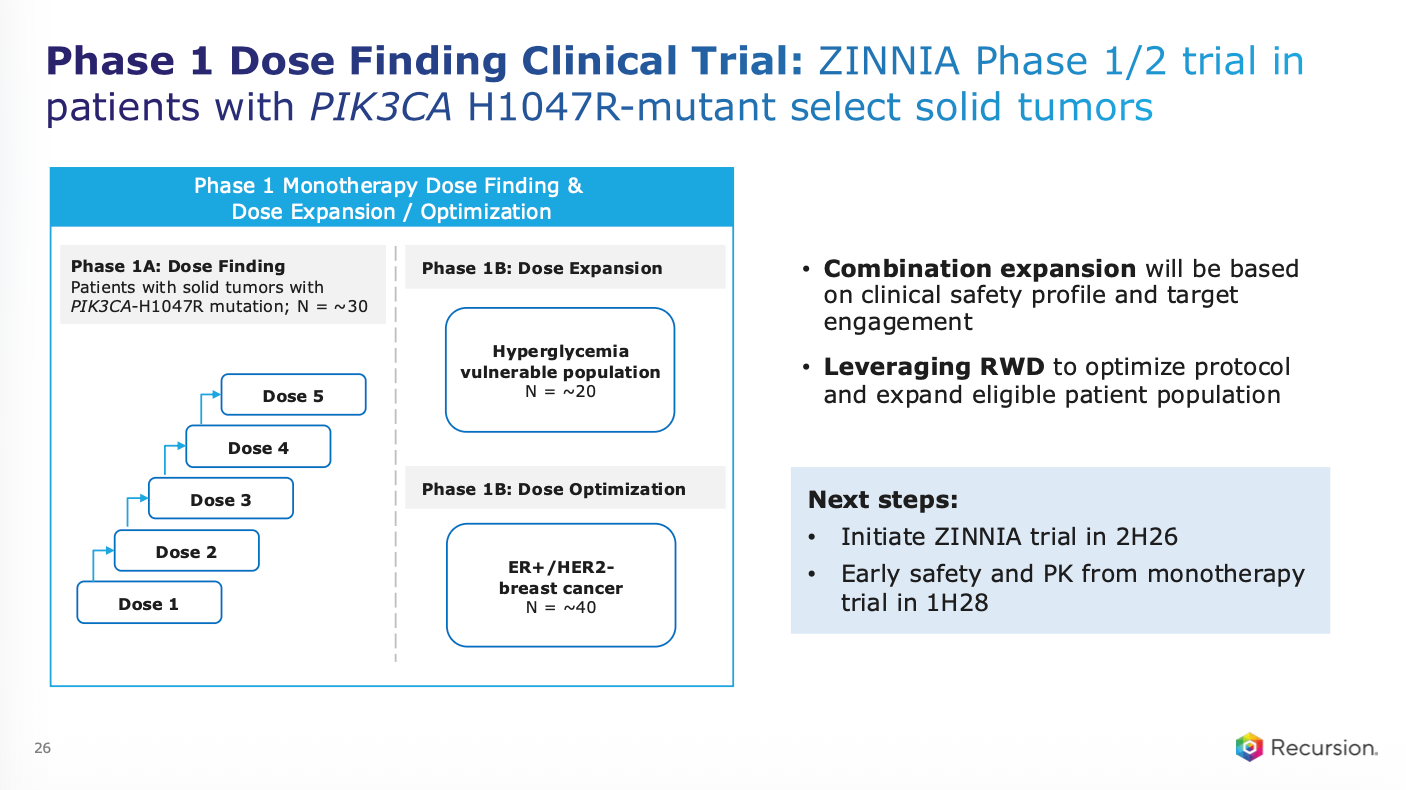
With the IND now cleared by the FDA, we intend to initiate a phase 1 ZINNIA trial later this year. Dose escalation will begin in patients with PIK3CA H1047R mutant solid tumors. Once tolerability is confirmed at an active dose, we intend to expand into the hyperglycemia vulnerable patient cohort to confirm the improved tolerability in this patient population. Dose optimization of two active and tolerated doses will then be performed in ER+/HER2- negative breast cancer patients. We may also expand into additional tumor types based on emerging data. We expect to share the first data from this dose escalation part of the trial in the first half of 2028. And with that, I’ll turn it back over to Najat.
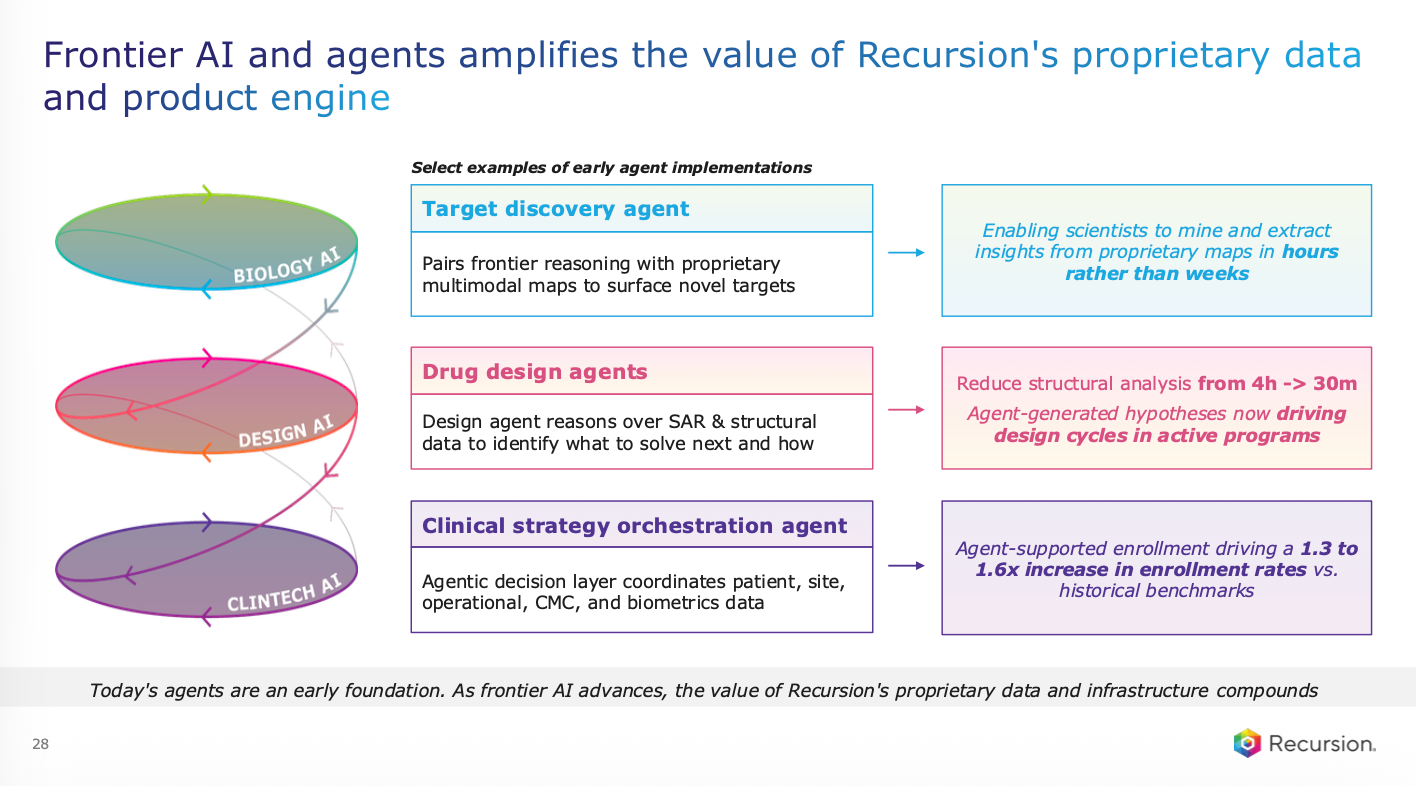
Shifting gears a bit, we often asked about whether advances in Frontier AI can reduce or increase Recursion’s competitive advantage. We believe we have a truly unique competitive edge. As reasoning models and agents continue to improve, they become dramatically more powerful when paired with proprietary data, automated labs, and real experimental feedback. That’s exactly the system we’ve been building for years. Now, we are deploying agents across biology, chemistry, and clinical development across the engine and also alongside our scientists.
In biology, here’s some very quick examples. Our target discovery connector is helping scientists interrogate our proprietary biological maps in hours rather than weeks. These are the large maps that we just talked about earlier in our partnership with Roche/Genentech, but also the internal maps that Recursion has built over years, accelerating the discovery of novel targets. In chemistry, our design agent reasons across structure, SAR, and experimental data to prioritize the next design hypothesis, critical inflection points in programs. This helps our scientists decide what to make next and compress design cycles from roughly 4 hours of structural analysis to about 30 minutes. And in clinical development, the agentic workflows are already improving patient enrollment, contributing to about 1.3x to 1.6x improvements over historical benchmarks. That’s significant.
These are still early examples, but I will have Chris Radoux, our Director of Structure Based Technology, who’s in this day in and day out, walk you through a real example in practice.
[Link to Video - Transcript Below]
How we design our drugs matters as much as the drugs themselves. It’s not about a single method. It’s about an ecosystem. Tools compute data and a UI that lifts productivity whilst capturing intent. Every decision, every step. Working on difficult drug targets can feel like walking a tightrope through chemical space. We are very deliberate about where we step.
We minimize the number of compounds we make through deep exploration in silico. We have captured 97 billion predictions over 5.5 billion compound records, traceable to the design runs that made them and the problem the designer was trying to solve. This becomes the playbook for future agents. Automation and plentiful computes means we are able to run calculations proactively for each project compound. This ensures design agents have a rich context for interpreting experimental data.
Here, a chemist asks how to improve potency. In seconds, the agents identify an insight from a compound the team has set aside due to solubility issues, then they explain why. The agent pulls in pre-computed physics based calculations to show that this gain isn’t a new interaction. It's a confirmation strain. That tells the team exactly how to redesign. Relationships no single scientist could hold; surfaced, explained, and turned into the next designs. That’s how our teams move faster.
Our approach to design has always been well suited to automation. Our inputs are far easier to record than inspiration at the bench. Several years of capturing our own drug design work has built up an immense catalog of design knowledge, and agents are helping us to unlock it.
Thanks Chris. What you just saw wasn’t a chatbot answering a question. It was an AI agent reasoning across our proprietary experimental data, our in silico data, our historical project knowledge, and structural biology to surface insights that would otherwise require scientists a long time. But then also non-obvious insights. That’s because in drug discovery, the bottleneck isn’t really just generating ideas. It’s finding the right idea quickly enough to keep the make-test- learn cycle moving. As these agents continue to improve alongside frontier models, we believe they will become an incredibly powerful multiplier of what we have already built.
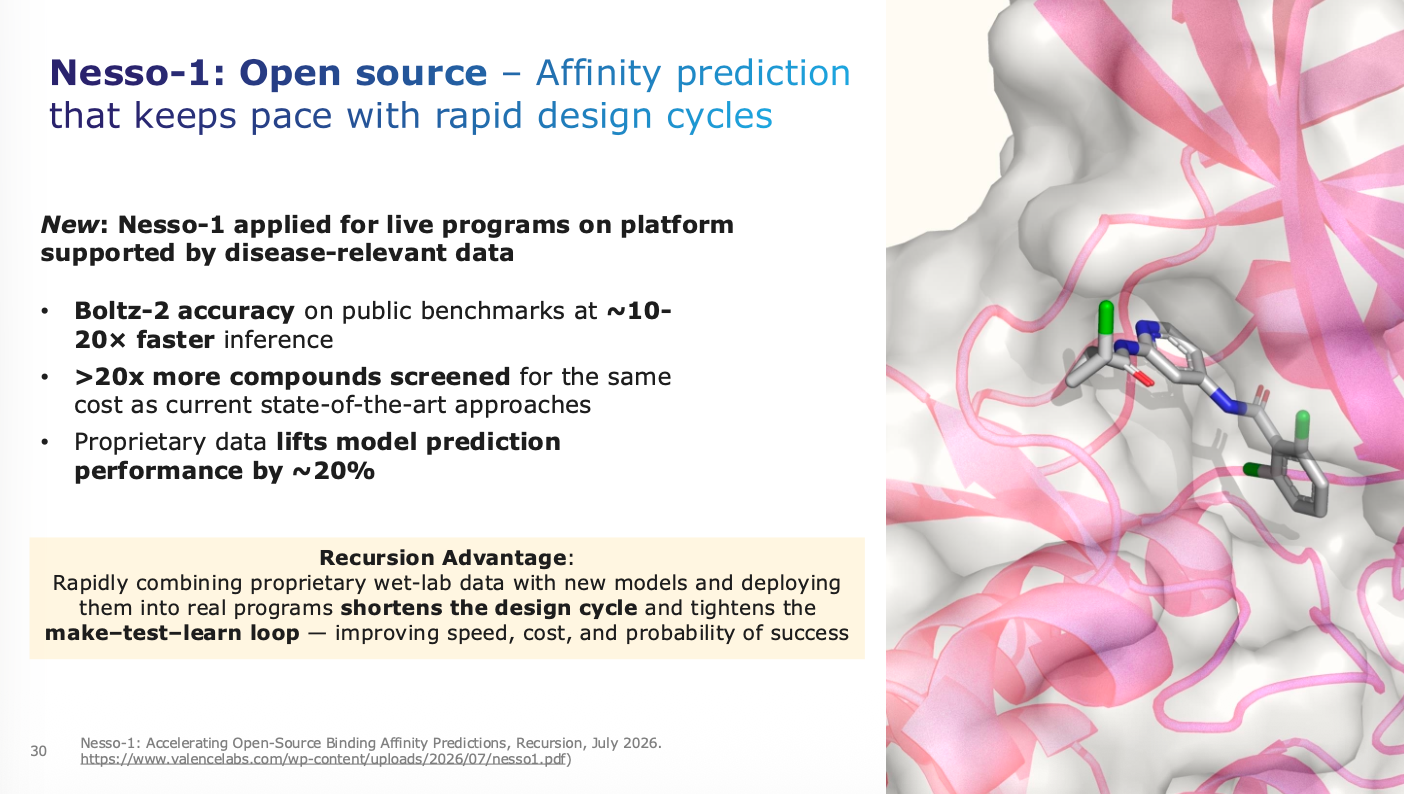
And finally, I’d like to highlight another aspect of our AI strategy. AI is advancing incredibly quickly, and no single model will remain state-of-the-art forever. Our strategy isn’t to depend on any one model.
It’s to build an AI-native product engine that can rapidly and adopt the best advances, whether they’re developed at Recursion or by the broader open source community. Nesso-1 is a great example. We developed an open source, binding affinity model that delivers Boltz-2 level accuracy with 10 to 20x faster inference, helping advance the field while enabling dramatically faster design cycles. But, look, the real advantage isn’t the model itself. It’s our operating system. It’s our operating model. It’s our ability to rapidly integrate these models into our proprietary data. That increases prediction performance, accelerates the make, test, learn, loop, and allows us to evaluate many more compounds at a lower cost.
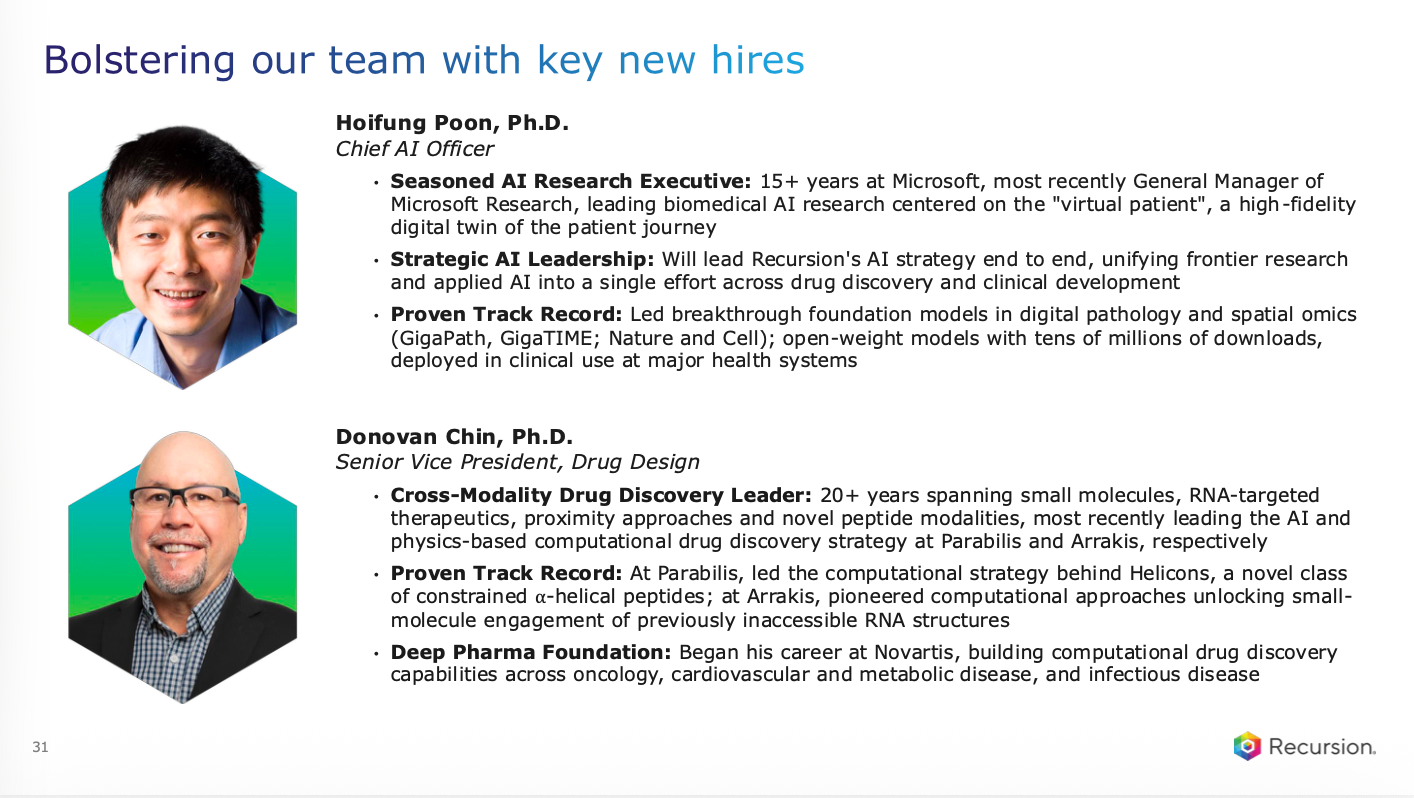
And finally, great technology only creates value if you have the right people to translate it into medicine. We firmly believe that. And that’s why we have strengthened our leadership team in two critical areas.
First, Dr. Hoifung Poon joins us as Chief AI Officer. Hoifung is one of the world’s leading AI researchers with more than 15 years at Microsoft Research, where he led pioneering work in biomedical foundation models and AI for health care. Importantly, though, he’s not just a researcher. He has repeatedly translated frontier AI into real world applications and deployed that at scale. At Recursion, he will unify our end-to-end AI strategy, bringing together frontier research and applied AI across biology, chemistry, and the clinic.
Second, Dr. Donovan Chin joins us to head up drug design. Donovan has spent more than two decades solving some of the hardest problems in drug discovery, from small molecules and RNA therapy targeted therapeutics to proximity based medicines and peptide modalities. Across Parabilis, Arrakis, and Novartis, he repeatedly helped unlock targets that were previously considered difficult or even impossible to drug.
That breadth across modalities and depth and experience of translating computational design into medicines is exactly the capability we need to continue building at Recursion. Together, Hoifung and Donovan strengthened the two engines that will continue to define our future; world class AI, and world class scientific design.
Now I’m going to turn it over to Ben to give us a financial update.
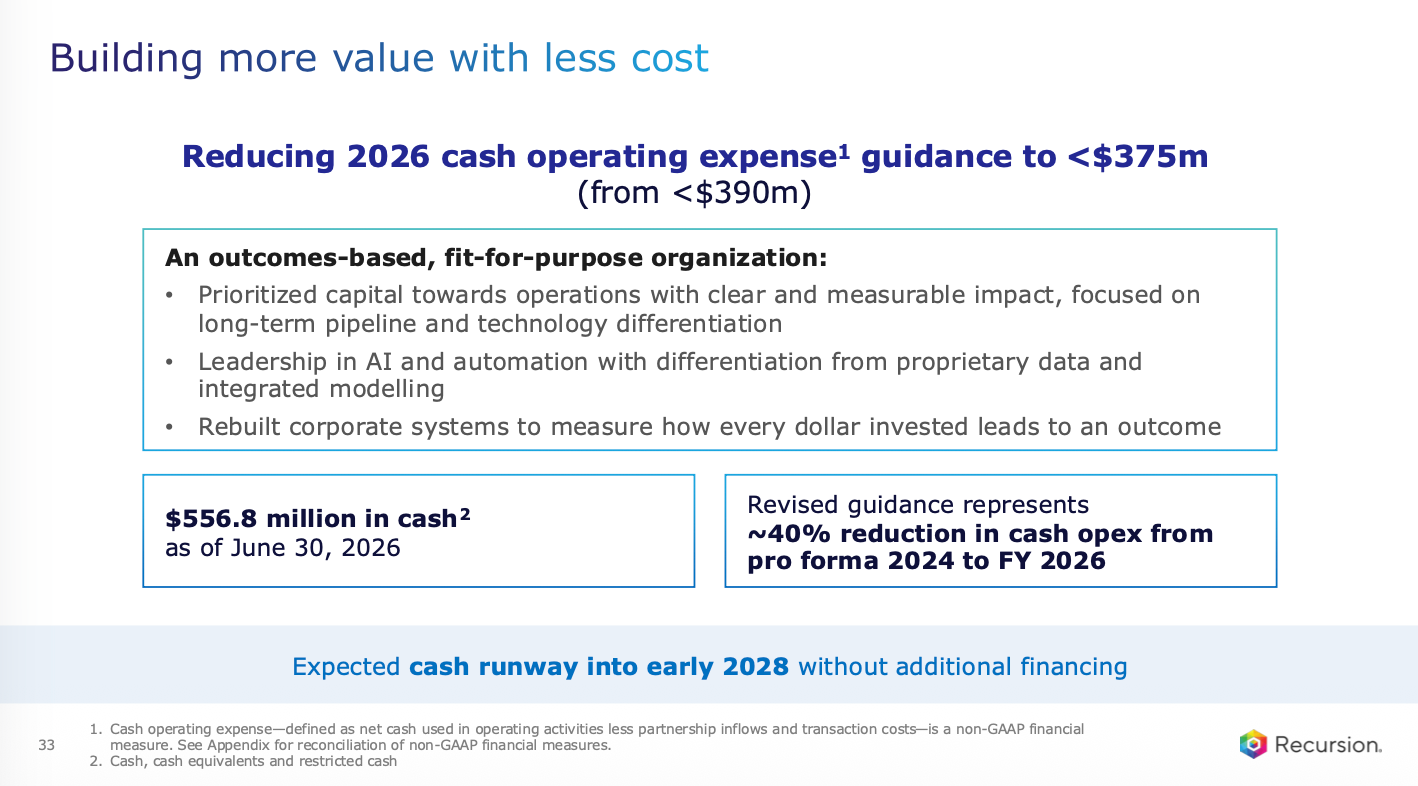
Thank you Najat. As I’ve said in the past, we want to continuously increase the impact of every dollar we spend. We are demonstrating this today by lowering our 2026 full-year cash operating expense guidance to $375M. In total, our revised 2026 guidance represents a nearly 40% reduction from comparable 2024 pro forma expenses. Through disciplined data driven management, we have been able to continue lowering opex while still advancing our differentiated internal pipeline, achieving a series of partnership milestones, and maintaining a leadership position in AI powered drug discovery. In our clinical pipeline, we use our clintech platform to drive more efficient enrollment and planning of our clinical trials, reducing the time and cost to reach important data.
Najat and Chris described some of the systems that we use to make our internal discovery both more efficient and more effective. We also focus our technologies on predicting and answering the hard questions first so we can prioritize those programs with clear potential clinical and commercial differentiation as early as possible. Because we deliver outcomes that are truly novel and differentiated, like our Roche/Genentech milestone today, our partnerships have achieved over $500M in cash inflows, including more than a dozen successful discovery milestones. All of our partnerships are designed to be breakeven or profitable on a direct cost basis from the start with substantial value growth as we achieve milestones. In our product engine, we are able to build, test, and integrate AI models on real projects using the scale of our internal pipeline and partnerships.
We know not only if the model benchmarks well, but if it matters when it’s applied to a drug program. This direct application allows us to determine early which technology investments are likely to have real world impact. We apply the same disciplined management style to our corporate operations. We have been able to maintain G&A at a relatively low percentage of total cost, which helps us to maximize the scientific ROI of every dollar we spend. We ended the quarter with approximately $557M in cash and equivalents, which we believe provides us with an operating runway through early 2028.
And with that, I’ll turn it back over to Najat.
Thanks Ben. I’ll close by looking ahead.
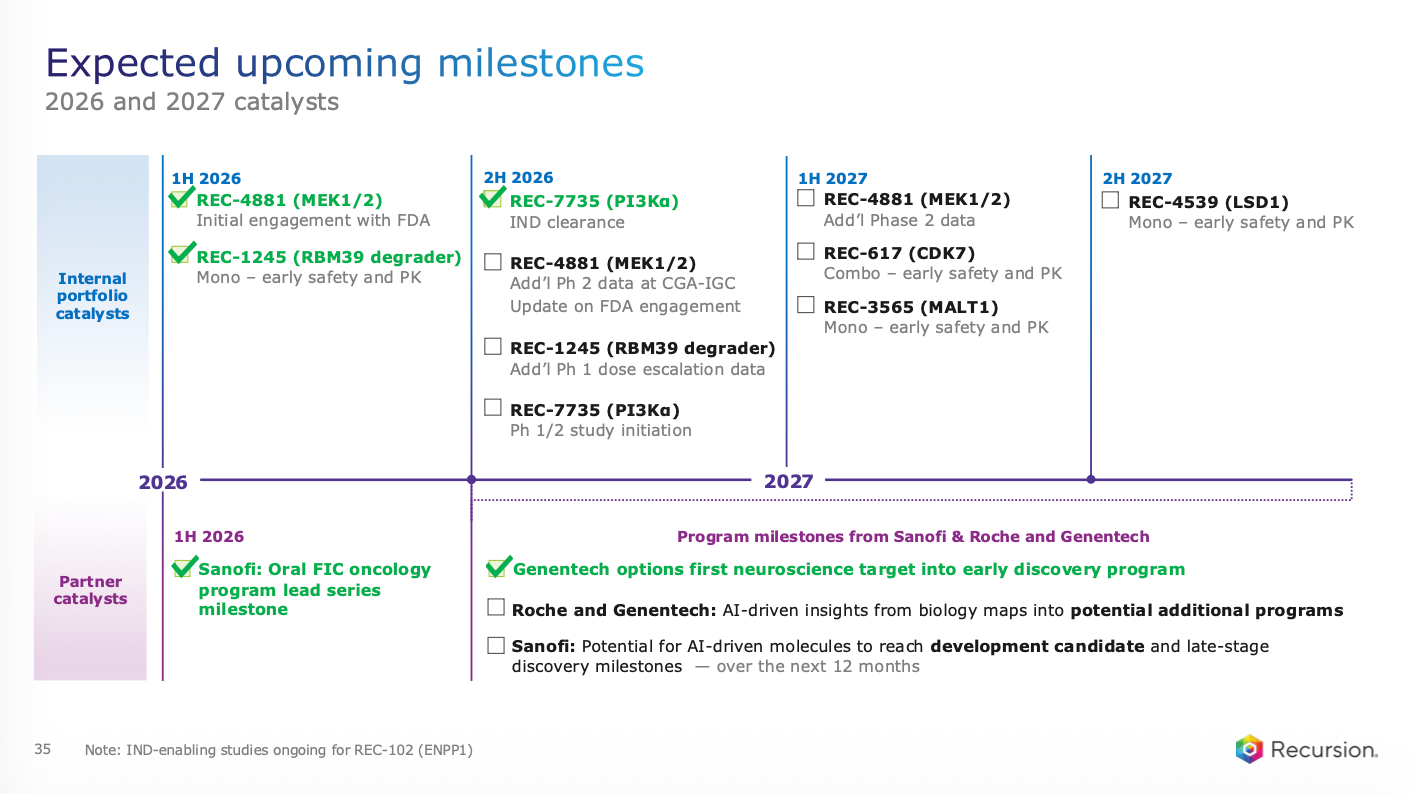
We’ve built an AI-native product engine. Now the focus is expanding its impact while continuing to translate its capabilities into the right programs and repeatable proof points. So on our wholly-owned portfolio, you should expect to see continued progress across multiple programs, additional phase 2 data for REC-4881 and a regulatory update before year end, continue advancement of REC-1245 with a more wholesome update later this year, the initiation of REC-7735 that Vicky just mentioned, and progress across the broader pipeline. We are on track across those multiple fronts. With our partners, we expect to build on this year’s momentum. Following the advancement of the first previously unexplored neuroscience target with Genentech, we see the potential for additional programs to emerge from our maps. And with Sanofi, we expect the potential to continue the progression of AI design molecules towards development candidates and major stage milestones.
We’re entering an exciting period with multiple opportunities to demonstrate the power of our engine. With that, thank you again for the time today, and I’d be happy to take your questions.


